
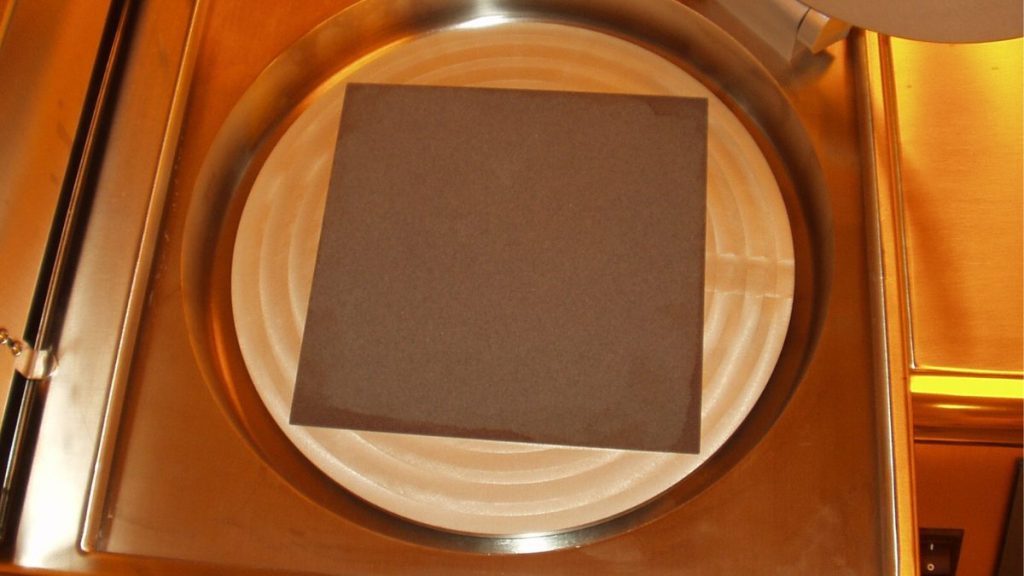
Most Cee® spin chucks use vacuum to hold the substrate in place during processing. Vacuum is supplied through the spindle and chuck, drawing the substrate against the chuck surface. A reliable hold depends on the substrate forming a good seal with the chuck. Cee® also offers captive chucks that hold substrates mechanically without vacuum; the checks below apply to vacuum chucks.
The vacuum valve on Cee® equipment is normally open. If the equipment loses electrical power, the valve stays open and maintains the connection to the vacuum source, provided that source remains available. During operation, the equipment also monitors vacuum as an interlock. It will not start a recipe if the required vacuum cannot be achieved, and it will abort a recipe if vacuum is lost.
When a wafer slips or a vacuum fault appears, begin with the chuck and substrate. Chuck size, spindle seating, centering, and the condition of the contact surfaces can all affect the hold. The following checks work through those items first, then cover vacuum loss during processing and checks of the vacuum supply and path.
The core idea
A reliable vacuum hold depends on more than the vacuum supply. The chuck must fit the substrate, sit fully on the spindle, and seal against a clean, centered substrate. Check those conditions before tracing the vacuum path.
Match the chuck size to the substrate
Start with the actual substrate dimensions and the chuck size. Use the Cee® chuck sizing chart (PDF) linked from the Circular Spin Chucks page to select the appropriate chuck for the substrate. For pieces, follow the chart’s guidance on the smallest side.
Correct sizing helps establish the intended vacuum seal and reduces opportunities for process material to migrate between the substrate and chuck. Backside contamination can dirty the chuck and draw material into the vacuum system, creating additional holding problems.
Thickness, shape, and backside features also matter. Thin substrates, patterned backsides, and unusual geometries may need a different chuck design. Contact Cee® if the standard sizing information does not cover your application.
Make sure the chuck is fully seated on the spindle
A chuck can be the correct size and still cause problems if it is not installed correctly. Before installation, stop the equipment and follow the removal and installation instructions for your configuration.
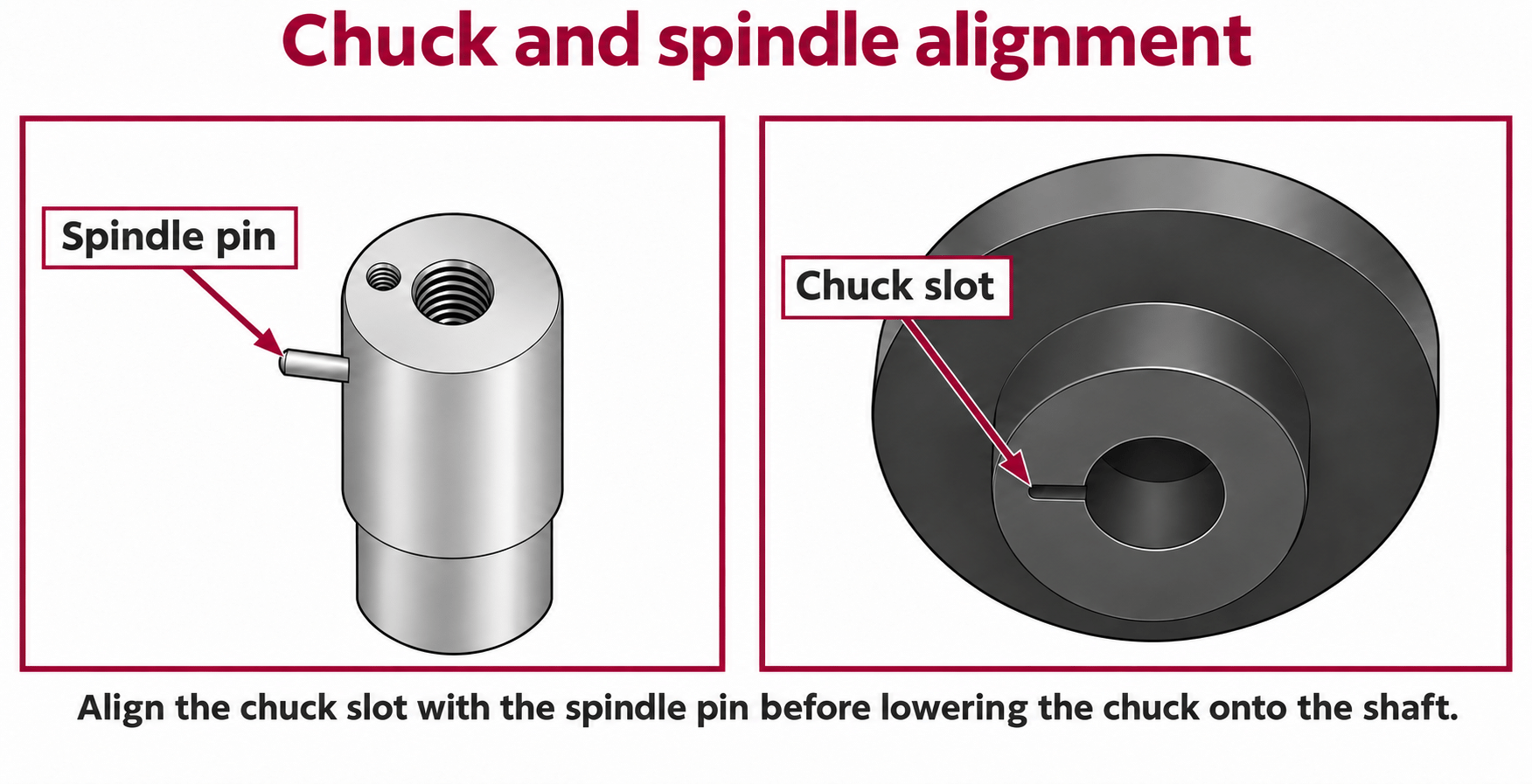
- Align the slot inside the chuck with the spindle pin or key.
- Lower the chuck straight onto the shaft until it is fully seated. If it resists, lift it and check the alignment rather than forcing it into place.
- Secure the center screw where fitted, following the applicable instructions.
The screw should not be used to pull a misaligned chuck into position. Incorrect engagement can leave the chuck uneven, damage the spindle, or cause vacuum faults. See the Spin Chuck Manual, Section 2.2 for installation and removal instructions.
Center the substrate before running
Centering becomes increasingly important as spin speed increases. An off-center substrate creates an unbalanced load and can contribute to movement or loss of vacuum during the recipe.
Use a Cee® centering device matched to the substrate and chuck size where appropriate. Confirm that the substrate covers the required vacuum area and sits evenly on the chuck. Centering helps establish correct placement; it does not replace the vacuum holding function.
Review speed and acceleration for the actual substrate and chuck combination, particularly after changes in size, thickness, or weight. Equipment speed capability alone does not establish a suitable operating limit for every setup.
If vacuum cannot be achieved before the recipe
When a vacuum fault appears before processing begins, contamination on the chuck or substrate backside is a common place to start. A small amount of dried material or debris can prevent the surfaces from sealing.
Inspect both contact surfaces with the equipment stopped. Also consider backside patterning, topography, holes, or other features that cross the vacuum sealing area. A clean substrate may still be unable to seal against a standard flat chuck.
Some applications need an O-ring chuck to establish a suitable seal. Where an O-ring is fitted, check its condition and seating. Discuss the backside geometry with Cee® before changing the chuck design or assuming that more vacuum will solve the problem.
Clean the chuck and handle it with care
Follow the Spin Chuck Manual cleaning instructions. Remove the chuck from the equipment before cleaning so solvent and loosened residue do not enter the vacuum system. Use the mildest effective solvent compatible with the chuck, any O-rings, and the process residue. The manual identifies isopropyl alcohol and acetone as examples; do not use caustic acids or bases.
For stubborn buildup, use the residue-removal procedure in the manual rather than scraping with an arbitrary implement. Allow the chuck to dry before reinstalling it, then check seating and substrate contact again.
Inspect for nicks, scratches, burrs, cracks, or deformation, especially after a chuck has been dropped or changed. Damage on the sealing surface can prevent a reliable seal even after cleaning. Handle and store chucks carefully to protect their precision surfaces.
Some damaged chucks may be suitable for rework. Contact Cee® with photographs and the chuck identification so our team can assess whether rework or replacement is appropriate.
If it holds at first but loses vacuum during the recipe
Record when the problem begins: during acceleration, at higher speed, after dispense starts, or during deceleration. Recheck centering, chuck selection, and the current recipe against the last successful setup.
Pay particular attention to process material reaching the substrate backside. In developer applications that flood the substrate with liquid, a large amount of material can migrate underneath and be pulled into the vacuum system. That contamination can restrict or block the vacuum path, reducing the available holding vacuum during the recipe.
Correct the source of the backside contamination as well as any resulting blockage. Review chuck sizing, substrate placement, and dispense or spray conditions. Repeating the same process without addressing the material entry can allow the problem to return.
Check the vacuum supply and path
If the chuck and substrate checks do not resolve the problem, confirm that vacuum is actually reaching the equipment and meets the requirements in its operations manual. Check external tubing and connections for leaks, loose fittings, damage, or restrictions. With a shared facility supply, note whether the fault coincides with other equipment using vacuum.
Next, inspect the vacuum trap under the approved maintenance procedure. Collected process material or a blockage can restrict vacuum. If material has entered the trap, review how it reached the vacuum path before returning to processing.
Internal vacuum lines, valves, sensors, and spindle seals may require further diagnosis. Follow the equipment’s service procedures or contact Cee® for guidance on these checks. Do not bypass the vacuum interlock to continue processing.
Contact Cee® with the setup details
If the problem remains, send our technical support team the equipment model and serial number, chuck identification, substrate dimensions and thickness, and details of backside patterning or topography. Include the vacuum reading or fault message and the recipe step where it occurs.
Photographs of the stopped chuck and substrate, together with any recent changes in materials, utilities, cleaning, or recipes, help us narrow down the next step.