
The core idea
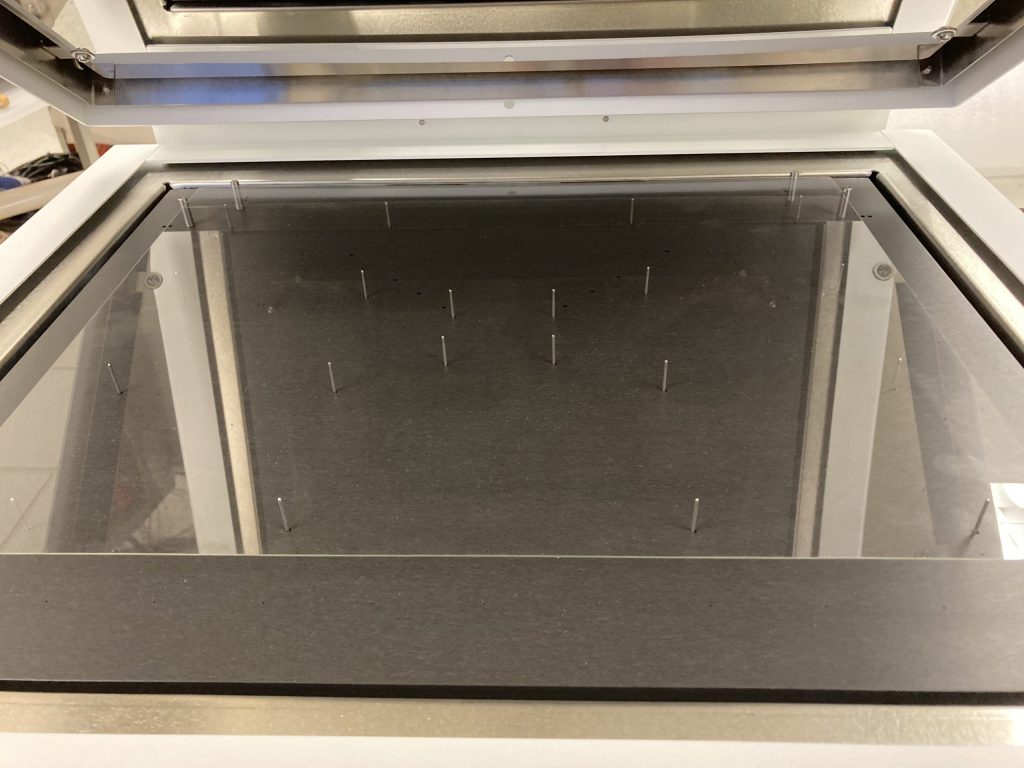
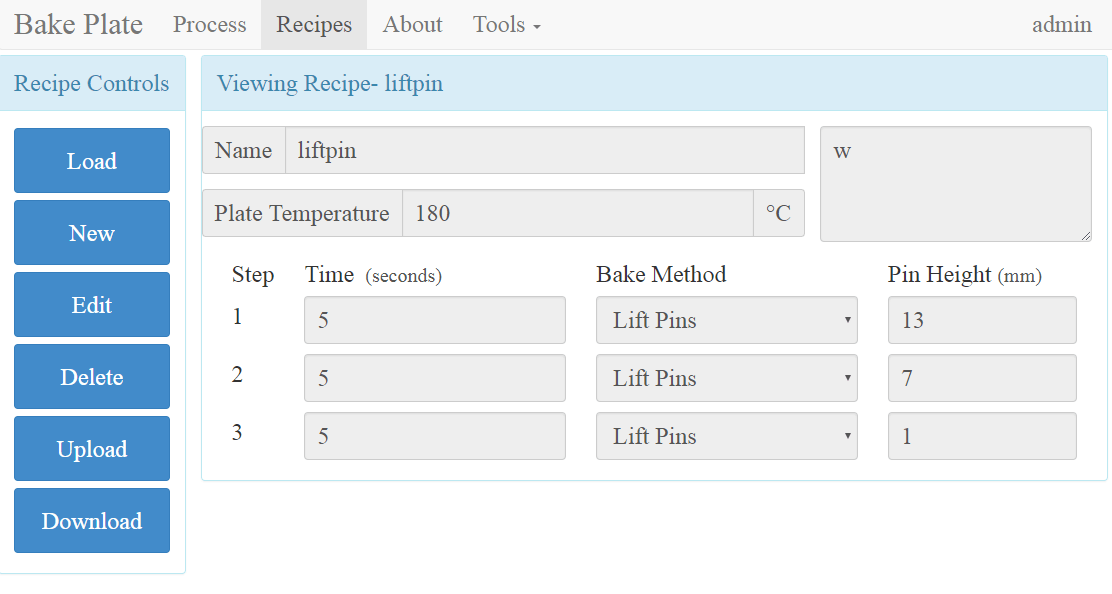
Programmable lift pins change the distance between the substrate and bake surface. Their position can be included in the recipe to shape the heating process.
Multi-Stage Baking with Programmable Lift Pins
Cee® Apogee® Bake Plates now incorporate Smart-Pins. The lift-pins utilize a motor that drives the lift-pins to a specific proximity height above the baking surface in any sequence or combination. The heights can be programmed in 0.1 mm increments, with an overall operating window from 0.1 mm to 19 mm. This feature allows flexible temperature ramping and can emulate several bake plate temperatures while maintaining a high degree of bake uniformity. Programmable lift pins are extremely valuable for the safe handling of thermal shock-sensitive materials such as gallium arsenide, lithium niobate, indium phosphide, gallium nitride, silicon carbide, sapphire, etc.
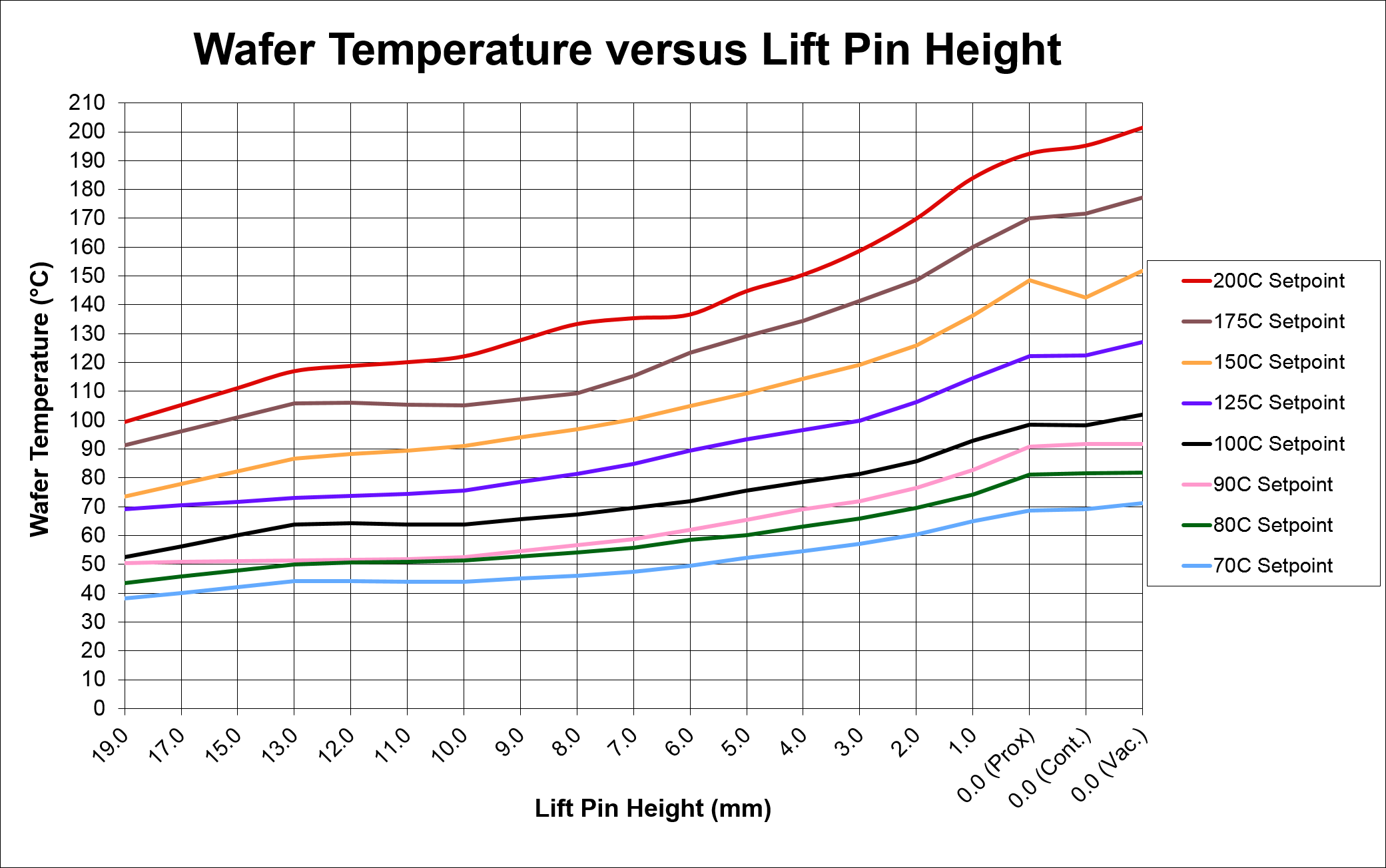
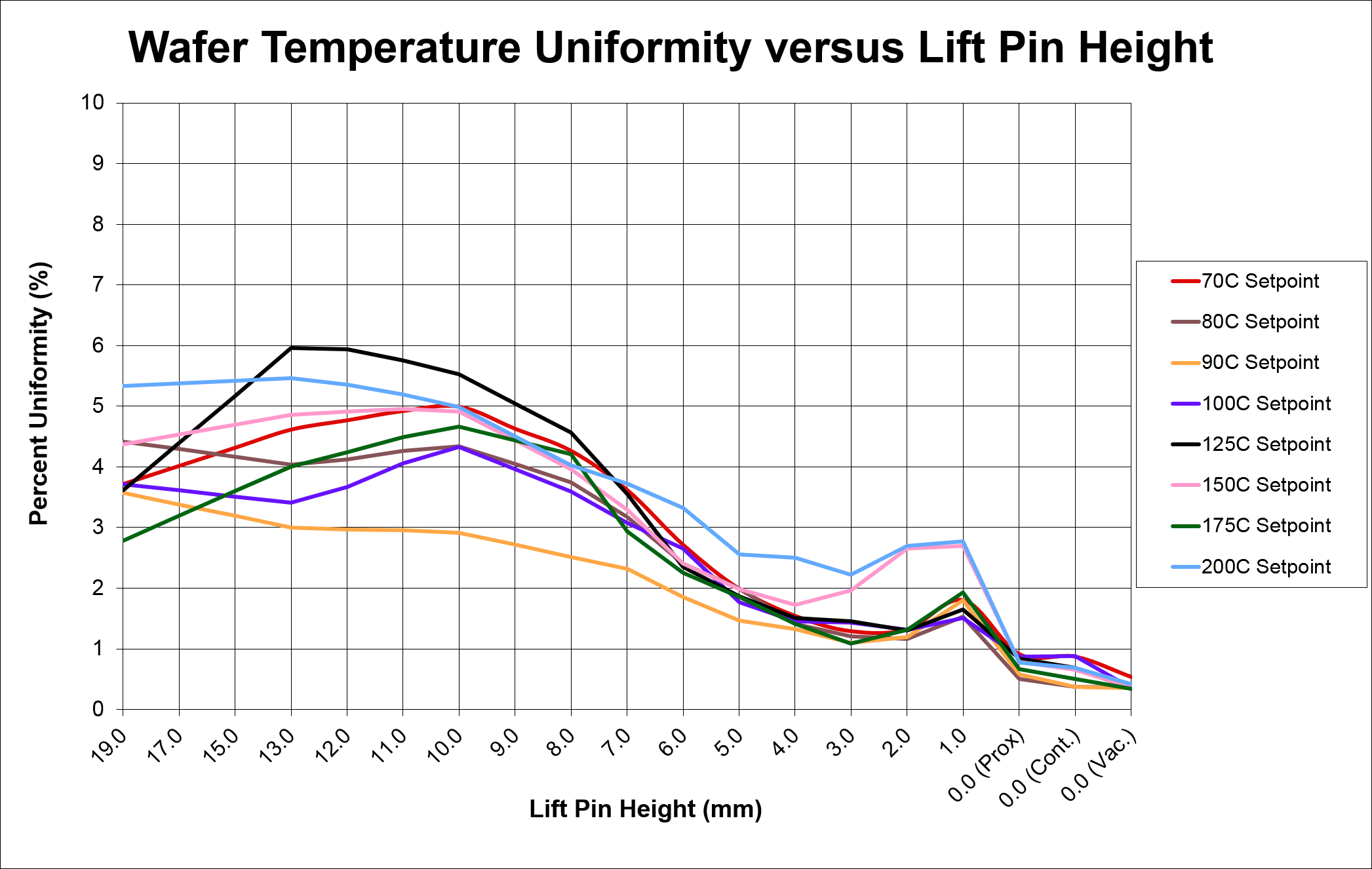
Cost Effective Equipment product engineers have utilized the KLA-Tencor® SensArray 17-point measurement probe to measure, track, and record temperature conditions produced by Cee® bake plates. The engineers have performed these process trials and developed user-friendly temperature matrixes for a variety of common temperatures used for a soft bake (100°C), post-exposure bake (PEB), and post-develop hard bake (205°C) for final curing.
The charts below represent several temperatures and incremental descent from 15.2 mm to hard vacuum contact in downward steps in increments of 2.5-0.5 mm. Each positional height is allowed to stabilize for a period of 300 seconds (5 minutes), and uniformity is recorded at these heights.
By eliminating the need for multiple bake plates, this programmable system is a cost-effective option in a space-saving design. This configuration is ideal for performing multi-stage baking, baking “from the inside out” for thick-film materials such as MicroChem SU-8 materials, MicroChem KMPR® materials, Shipley BPR™-100 photoresist, and Brewer Science® WaferBOND® HT-10.10 materials, and mitigating concerns associated with the “skin” effect.
The Cee® Apogee® Bake Plate product family brings together all these capabilities in a compact footprint designed for a lab-scale environment. Would you like to know more? Check out our related post on Bake Plate Process Theory or reach out to our sales team today!