
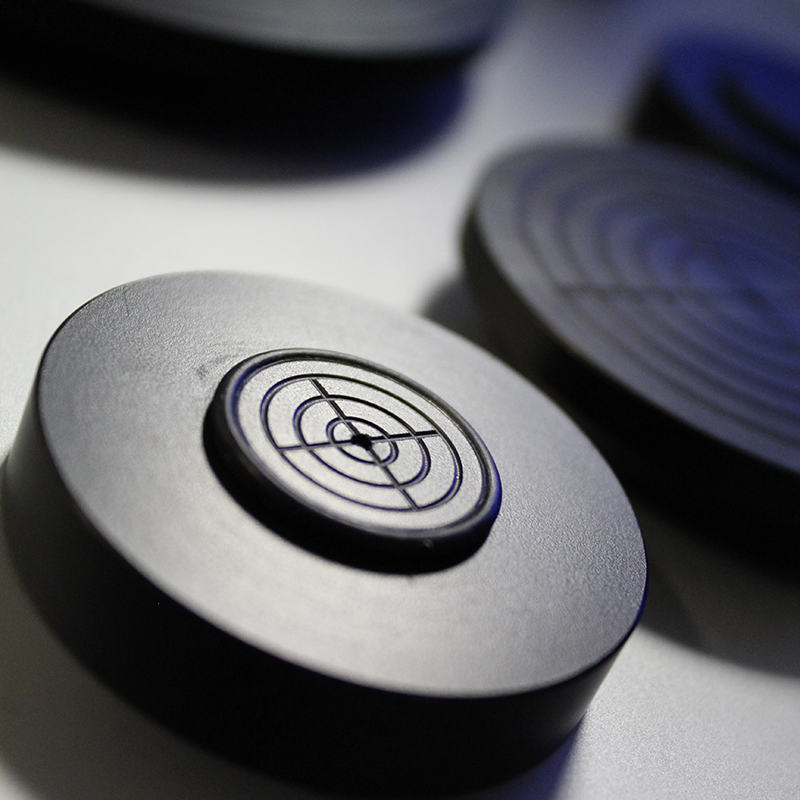
A full wafer is not always the starting point for research. You may be working with a diced silicon sample, a glass coupon, or a small piece of a material that is expensive or difficult to obtain. Spin coating can still be an option when the sample is held and supported appropriately.
The first step is to match the chuck to the piece you actually have. Some small samples can use a standard circular vacuum chuck. Others benefit from a recessed or custom design that accounts for their shape, thickness, and permitted contact areas.
The core idea
Start with the sample’s dimensions, shape, and backside contact requirements. A suitable chuck can allow a small piece to be processed on a compatible spin coater. The holding arrangement and coating recipe should be selected for that sample.
Start with the sample’s actual footprint
For a rectangular piece, both length and width matter. The Cee® Chuck Sizing Chart (PDF) uses the smallest side of the substrate to help select a chuck. Choosing from the long dimension alone can leave part of the vacuum surface uncovered.
Thickness, flatness, and backside features matter alongside footprint. A rigid, flat piece has different support needs from a thin or flexible sample. Backside patterning, holes, or raised features may also affect where a vacuum seal can be formed.
For an irregular outline, send a drawing or a photograph with dimensions. The overall width and length may not describe the area available for holding.
Choose the holding approach that fits
Small samples do not automatically require a custom chuck. Begin with the standard options, then consider a different design where the sample or process calls for it.
| Sample or requirement | Option to consider | What to confirm |
|---|---|---|
| Rigid piece with a suitable, flat backside | Circular vacuum chuck | Sample coverage of the vacuum area and the recommended size range. |
| Square or rectangular piece | Recessed chuck | Length, width, thickness, and the fit of the recess. |
| Thin or flexible sample | Porous chuck | Backside support, contact restrictions, and coverage of the porous surface. |
| Unusual shape or restricted contact areas | Custom chuck | The holding arrangement, chemistry, and equipment interface. |
A recessed chuck is made for specified substrate dimensions. Its recess locates the piece, while the surrounding chuck surface can help reduce the airflow disturbance at the corners and edges of a rectangular substrate. A piece that happens to fit inside an existing recess is not necessarily the correct match.
Plan the backside contact
A vacuum chuck needs the sample to cover its vacuum holding area and form the intended seal. Keep that contact area clean and consider whether the backside can tolerate contact with the chuck. A small piece with backside topography may need a different sealing arrangement from a flat sample of the same size.
Discuss any surface that must remain untouched, along with the process chemistry and cleaning requirements. Chuck material and any O-rings must be compatible with the actual chemicals involved.
These details are useful before choosing a chuck. They help distinguish an application that can use a standard configuration from one that needs a different contact surface or a custom design.
Account for the shape when assessing the coating
Square, rectangular, and irregular pieces have different edge geometry from a round wafer. The corners and edges deserve attention when assessing film coverage and uniformity. Decide which area of the sample needs to meet your process requirements, especially if the device or measurement area extends close to an edge.
A recessed chuck can be useful for rectangular samples because its surrounding surface emulates a round wafer. The chuck design supports the coating process, but the finished film still needs to be evaluated with the selected material and recipe.
When comparing results, record the sample dimensions and chuck configuration as well as the recipe. That makes it easier to tell whether a change came from the coating settings or the way the sample was supported.
Develop the recipe for the sample
A recipe used on a full wafer can provide a starting point, but it should be evaluated on the smaller piece. Review dispense volume and placement, dispense timing, acceleration, spin speed, and spin duration against the coverage and film properties you need.
Confirm the sample is centered and retained as intended before processing. A handheld wafer-centering device is matched to a particular wafer and chuck diameter; it is not automatically suitable for an arbitrary coupon. A matched recessed chuck provides a location reference for its specified substrate.
Select speed and acceleration for the actual sample and chuck combination. The spin coater’s maximum capability is not a recipe recommendation for every setup. See Selecting Maximum Spin Speed and Acceleration for more on the factors involved.
Bring the sample details to the equipment discussion
If you are planning a small-sample coating process, send Cee® the details below:
- Sample material, shape, length, width, and thickness.
- A drawing for irregular outlines, holes, or other special features.
- Backside condition and any areas that cannot contact the chuck.
- Coating chemistry, cleaning chemicals, and the area that needs to be coated.
- The Cee® spin coater model you have or are considering.
The Chuck Design Questionnaire (PDF) is a useful place to collect this information. It helps our team assess standard chuck options and identify where a custom design may be appropriate.
For installation, handling, and maintenance, use the Spin Chuck Manual for your supplied configuration. To discuss a new application, contact Cee® with your sample and process details.